The 3 Best Ways To Play The King's Indian Attack
May 31, 2026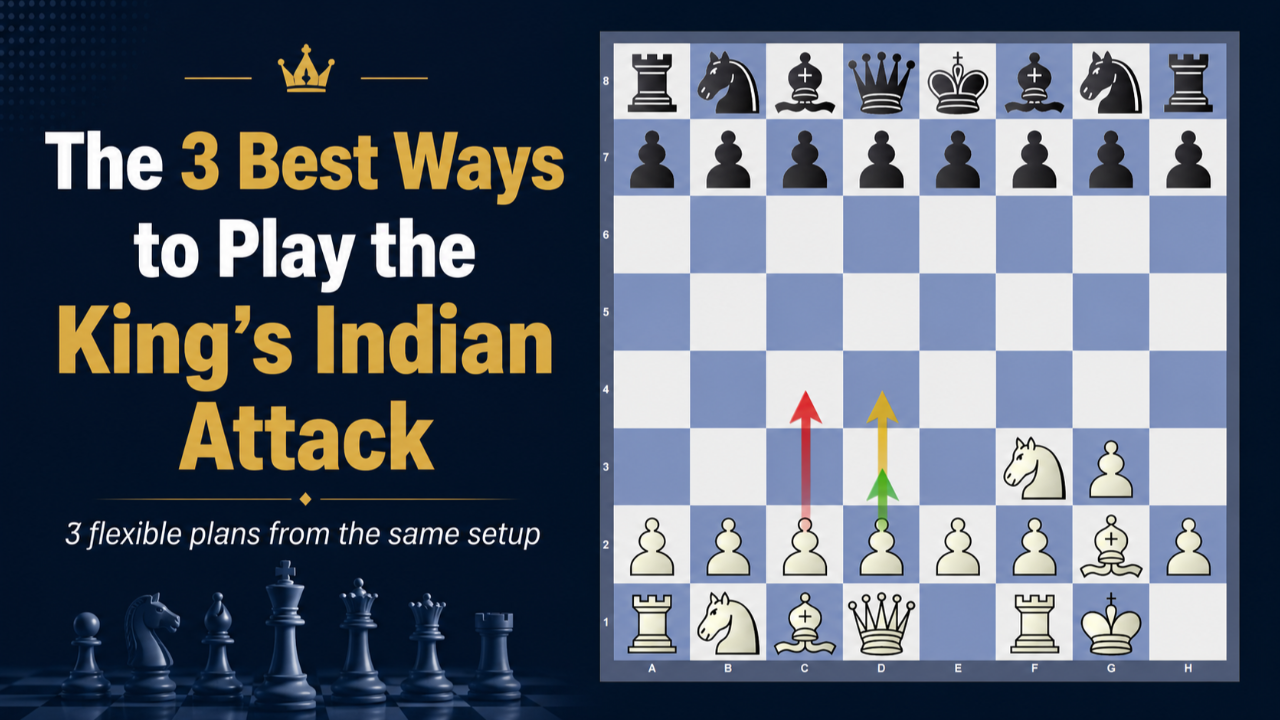
Dear chess friends,
In this article I'll show you the 3 main ways to play the King's Indian Attack (KIA for short) - and when it's best to use each setup!
The King's Indian Attack was recommended by none other than the GOAT, Magnus Carlsen, as the best 'beginner' opening for White, due to how safe it is and how much flexibility you have in how to play it your way.

(image by ChatGPT)
You're going to love it.
By the way, if you want to save yourself a lot of trial and error, you can get my 'How To Play The King's Indian Attack - Fast Track PGN' for a small one-time fee here.
How I Discovered The King's Indian Attack
I first learned of the King's Indian Attack through the book 'Winning Chess Openings' by GM Yasser Seirawan. His 'Winning Chess...' series of books were the first 'serious' chess books that I read thoroughly, and it greatly enriched my overall understanding of the game.
Near the end of the openings book, he shared the following system for White, under the chapter 'Building A Home For Your King': 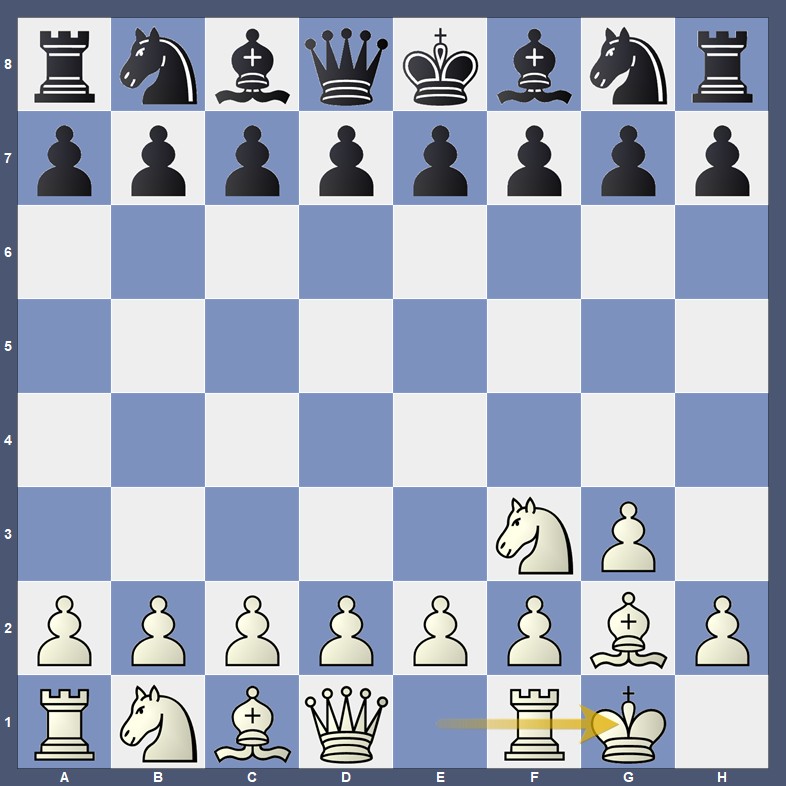
I've often used that metaphor when showing this setup to my students over the years, with some unique Illingworth flair:
- the g3-pawn is the 'door' stopping Black's pieces getting in (our filter/bias in real life);
- the g2-bishop is the 'priest' keeping all the evil spirits out (this is our spirit/soul in real life);
- the f3-knight is the 'sentry' or guard watching out for any danger (much like the human mind!)
- the f1-rook is the 'furniture' in the house (it keeps us comfortable but doesn't really help us grow)
and then the g1-king is us :)
Now that you understand the function of each piece, let's discover the 3 pawn breaks that turn the King's Indian Attack from a 'safe' system opening into a dangerous weapon for our opponents!
Way 1: The e4 Break
The fun part of playing the King's Indian Attack with e4 is that there are actually two different first moves you can play to get the 'e4 KIA'! (and no, I wasn't thinking of 1.g3!).
Let's take this diagram position, to show you what I mean. 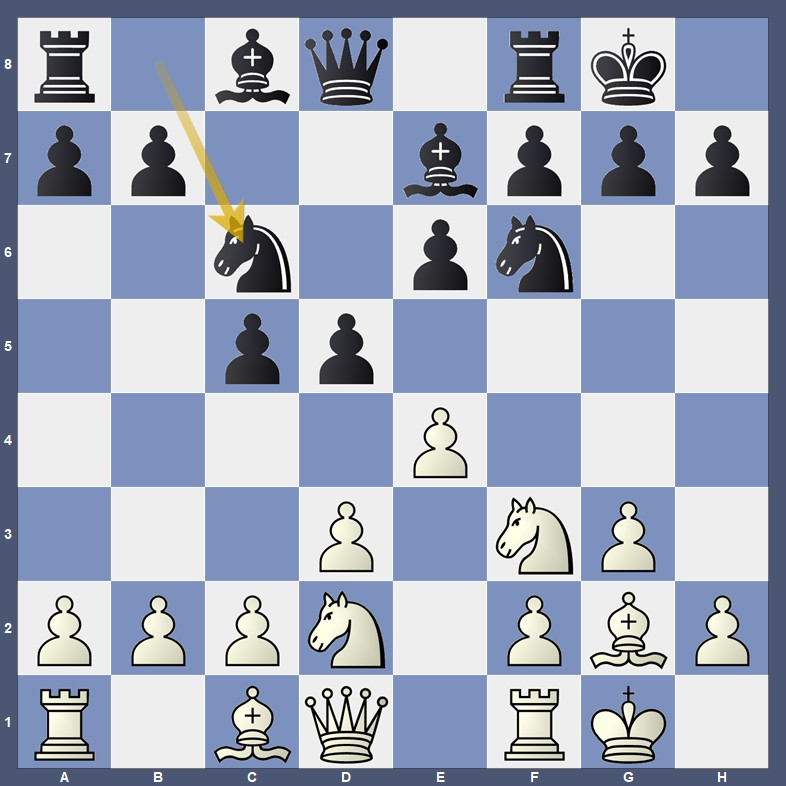
There are in fact several ways to reach this 'standard' position!
The 'pure' King's Indian Attack move order would be 1.Nf3 d5 2.g3 Nf6 3.Bg2 e6 4.0-0 Be7 5.d3 0-0 6.Nbd2 c5 7.e4 Nc6, obviously with some possible changes in the move order for both sides along the way.
But there is also the 'French' move order, which is how Fischer reached this position in his famous King's Indian Attack win in 1967 against the Mongolian IM Lhamsuren Myagmarsuren (click for the full game)
That game started 1.e4 e6 2.d3 d5 3.Nd2 Nf6 4.g3 c5 5.Bg2 Nc6 6.Ngf3 Be7 7.0-0 0-0, reaching the same position!
And yet another possible move order would be 1.e4 c5 2.Nf3 e6 3.d3 Nc6 4.g3 d5 5.Nbd2 Nf6 6.Bg2 Be7 7.0-0 0-0, again transposing.
That's the power of playing a 'system' opening - we can reach the same position from a lot of different move orders. And even if Black plays something different, like a French or Sicilian, we can still end up in a similar type of position.
That being said, there are some situations where the e4 plan won't work so well.
For instance, if you start with 1.e4 to reach the King's Indian Attack (with Nf3/d3/g3/Bg2/0-0 to follow), it doesn't work as well against certain setups, like the Botvinnik formation: 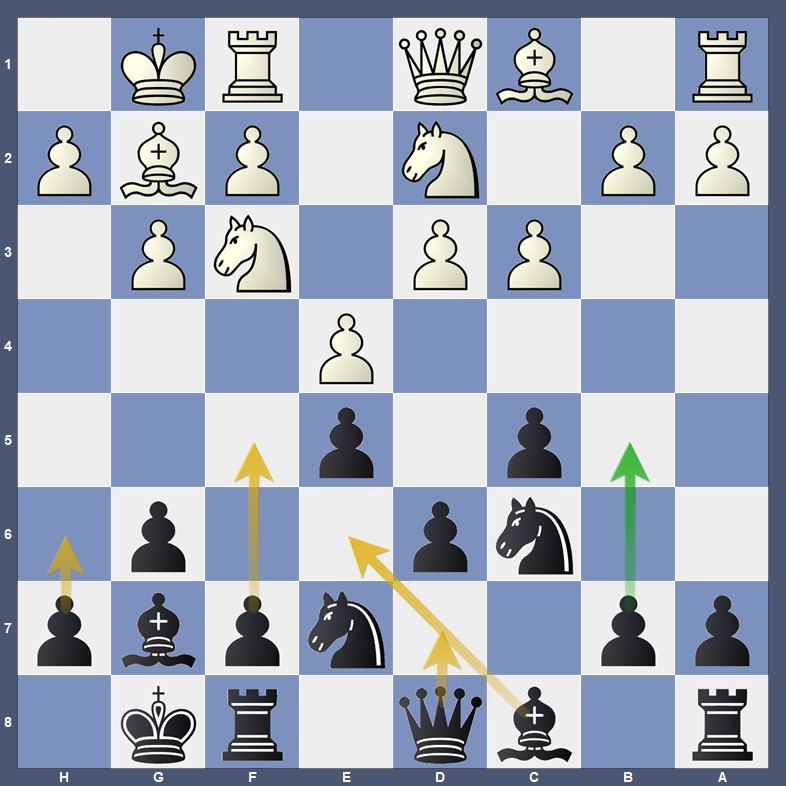
This was my favourite setup against the King's Indian Attack as a teenager. I would play ...h6, ...Be6 (no more Ng5!), ...Qd7, and then take over the initiative on the kingside with ...f5, knowing that we don't have to fear an f4 or d4 break. And we also have the flexibility to expand on the queenside with moves like ...b5.
This is why you're going to want to play the KIA a bit more flexibly - either by not always reverting to it within 1.e4, or not always reverting to the 'thematic' d3/Nbd2/e4 after you castle your king.
To discover when to play e4 and when not to play e4 in more detail, get my 'Fast Track' PGN file here and start playing the King's Indian Attack in less than 30 minutes!
Way 2: The d4 Break (Catalan Style)
I'll open this section by sharing a funny story I read in a New In Chess Yearbook about 20 years ago.
One time, an IM and FM were playing each other in a classical tournament game. The game started with 1.Nf3 d5 2.g3 c5 3.Bg2 Nc6. Black was already getting excited by the prospect of playing a reversed King's Indian with 4.0-0 e5, where the extra tempo would give White equality, but not better than that.
But instead, the IM played 4.d4, and the FM asked the IM, 'what are you doing???' 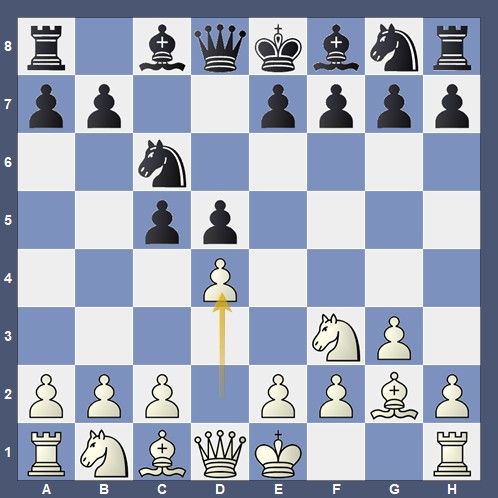
The IM replied - I am playing the Grunfeld Defence (1.d4 Nf6 2.c4 g6 3.Nc3 d5) with an extra tempo!
A funny example, which goes to show why it's useful to also know something about the openings you don't play!
In any case, it becomes evident that if Black tries occupying the centre with 4...cxd4 5.Nxd4 e5 6.Nxc6 bxc6, their centre will come under a lot of pressure after 7.c4, followed by Qa4, 0-0, Rd1 and Nc3 in some order, focus-firing on the d5-pawn. Modern engines already give White a small edge.
But we can't always rely on the d4 break - what made d4 work in this version is that we are able to meet ...e5 with Nxc6. If our knight was forced to retreat - such as with 3...Nf6 4.0-0 e6 5.d4 cxd4 6.Nxd4 e5 7.Nb3 Be6 - then our 'Reversed Grunfeld' would be a lot less effective, even with Black 'losing' a tempo in playing ...e6 and ...e5.
I find that d4 tends to work best as a way to transpose to other openings. For instance, after 1.Nf3 Nf6 2.g3 g6 3.Bg2 Bg7 4.0-0 0-0 5.d4 d6 6.c4 (or 5.c4 d6 6.d4), we have transposed to the Fianchetto King's Indian: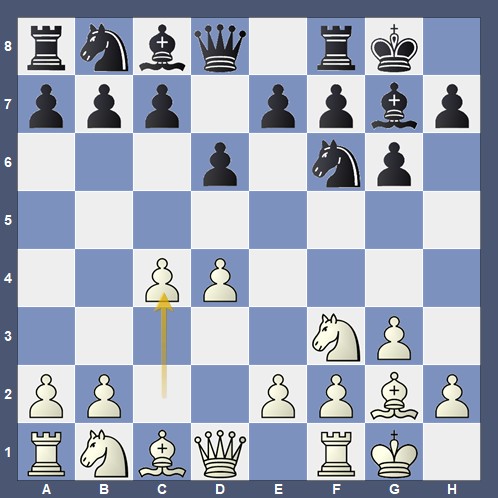
Or, if we take our first line from before with 1.Nf3 d5 2.g3 Nf6 3.Bg2 e6 4.0-0 Be7, instead of the d3/e4 plan, we can play 5.d4 0-0 6.c4 (or 5.c4 0-0 6.d4) instead, transposing to the Catalan with 4...Be7: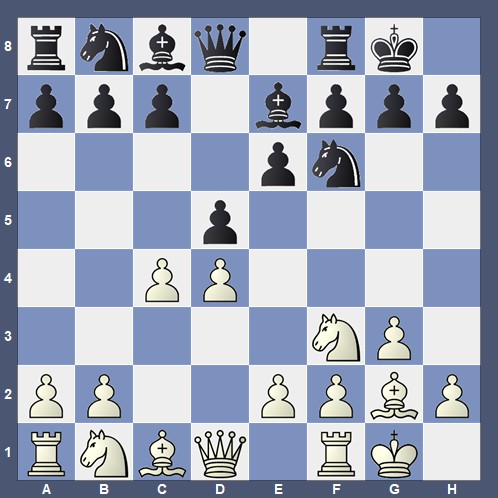
As you can see, when we play d4 in the King's Indian Attack, it tends to transpose back to 1.d4 openings. So it's a bit more work to master than playing it one of the other two ways, but is often used by masters as a way to get positions they want (like the Catalan and Fianchetto KID) while avoiding openings they don't like to face (such as the Grunfeld, Benko, Queen's Gambit Accepted and so forth).
Overall, you're more likely to succeed with the d4 approach if you either have existing experience in d4 positions, and/or are willing to put in the work to bridge the gap in understanding those more 'main line' structures. (The good news for you is that most players below 2000 don't really know what they're doing against g3 setups, so you can get away with not remembering the finer details as long as you have a rough idea of where to put your pieces and what pawn break you're playing for).
Way 3: The Hypermodern Style (with c4, sometimes b3)
The third way to play the King's Indian Attack is by not putting one of our pawns in the centre, but instead, going for a hypermodern approach of c4 (or rarely, b3 first), intending to control the centre with pieces rather than pawns.
I find this works extremely well against 'system' openings by Black, like the reversed London and Torre: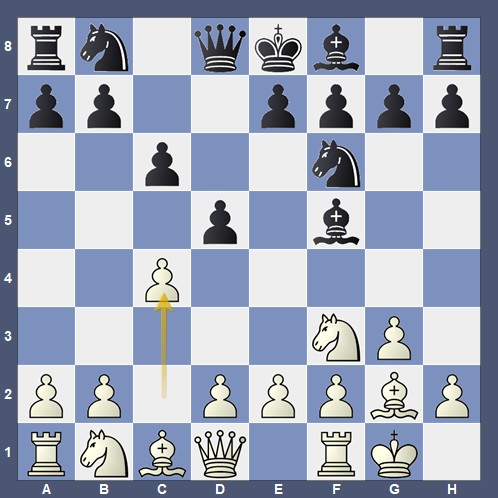
Compared to the London against the King's Indian Defence, our extra tempo gives us some exciting possibilities, such as an early Qb3 to attack the now undefended b7-pawn. A typical sequence runs 5...e6 6.Qb3 Qb6 7.d3!, neutralizing the 'London' bishop on f5. And it gets better - after the most common line of 7...Nbd7 8.cxd5 exd5 9.Qc2! Be7 10.Nc3 0-0 11.e4, White uses their central majority and the tempo gain on Black's bishop (and soon the Black queen with Be3) to obtain a small advantage.
One of my private students recently used this plan to get an opening advantage against a GM that heavily outrated them, so it's definitely a good plan to keep in mind!
The Double Fianchetto setup, meanwhile, can be a nice way to move order opponents into different types of position than what they are used to. If you find the King's Indian Defence annoying to play against, you can go for 1.Nf3 Nf6 2.g3 g6 3.b3!?, typically reaching the position after 3...Bg7 4.Bb2 0-0 5.Bg2 d6 6.d4: 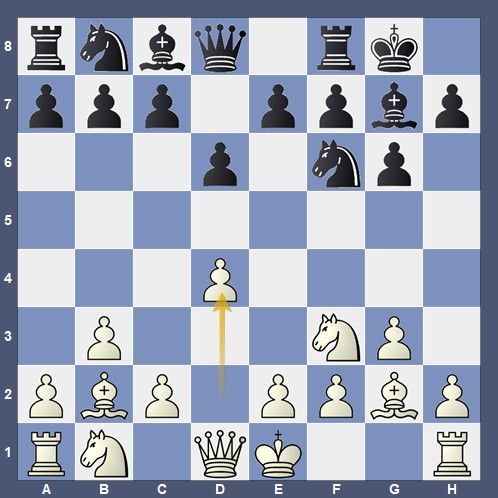
White has an impressive 62% score from this position in my 'Mega Database' database of over 10 million games, speaking to how uncomfortable such 'strategic' lines are for KID players to play against.
You can also play the Double Fianchetto against the Queen's Gambit Declined, with 1.Nf3 d5 2.g3 Nf6 3.Bg2 e6 4.0-0 Be7 5.c4 0-0 6.b3, intending flexible development with Bb2/e3/Nc3/Qe2: 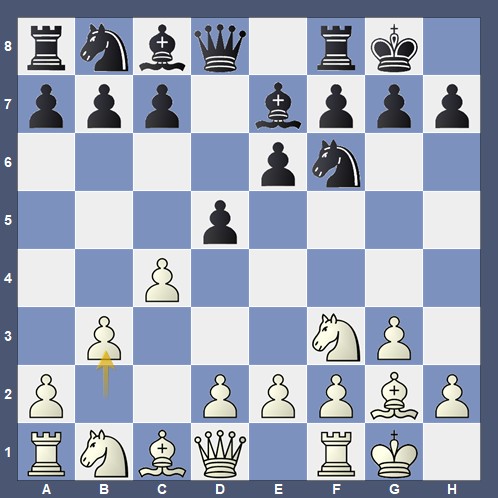
Nowadays White will often follow up with an early cxd5 to avoid the Reversed Benoni structures that can arise after a later ...d4, but it's ultimately a matter of taste which positions you prefer.
Summary/Conclusion
The point, as we've seen throughout this post, is that the King's Indian Attack gives you a lot of flexibility, and various options to steer the game toward the type of positions you want.
It's also very easy to start playing, being a system opening where we can put our pieces on natural squares, while still asking Black some tricky strategic questions.
If you'd like a 'Fast Track' repertoire to start playing the King's Indian Attack in your own games - with full explanations for each of the 19 key variations - you can get my 'How To Play The King's Indian Attack - Fast Track PGN' for a small one-time fee!
As a bonus, I've included 19 model games for White, so that you don't just get good positions out of the opening, but can turn those good positions into wins in the middlegame and endgame!
Good luck with playing the King's Indian Attack as White, and I will see you next time!
Get the unfair advantage over your next chess opponents!
Join our mailing list to receive daily chess improvement emails and free training videos from GM Max!
We hate SPAM. We will never sell your information, for any reason.